F. Scott Fitzgerald Wiki: Salary, Married, Wedding, Spouse, Family
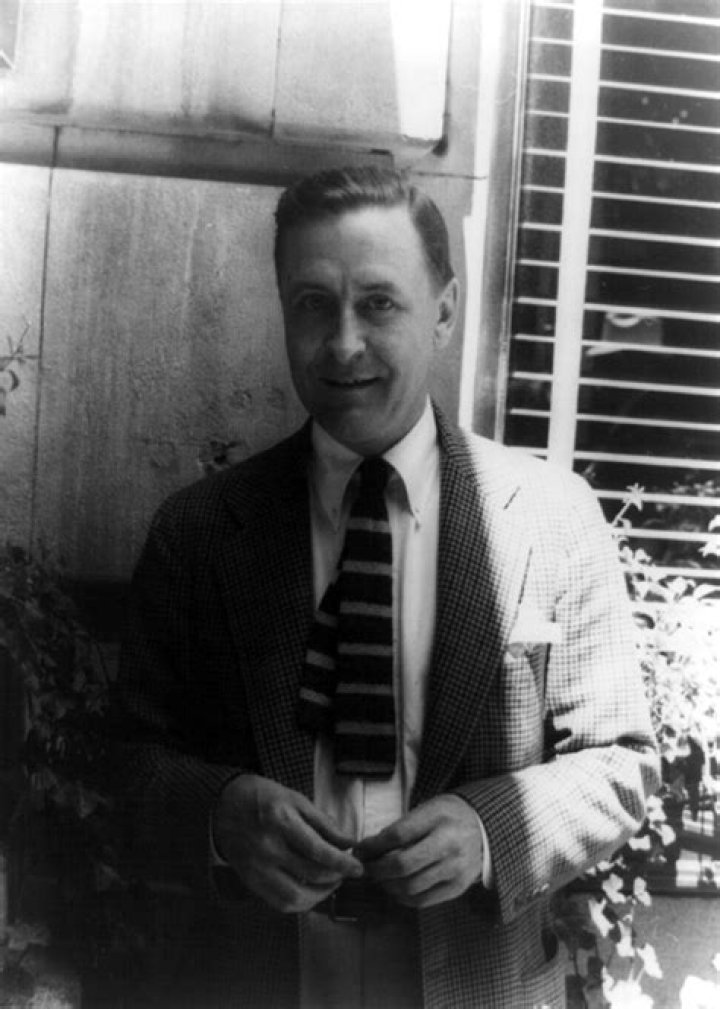
Francis Scott Key Fitzgerald (September 24, 1896 – December 21, 1940) was an American author of novels and short stories, whose works are the paradigmatic writings of the Jazz Age, a term he coined. He is widely regarded as one of the greatest American writers of the 20th century. Fitzgerald is considered a member of the "Lost Generation" of the 1920s. He finished four novels: This Side of Paradise, The Beautiful and Damned, The Great Gatsby (his most famous), and Tender Is the Night. A fifth, unfinished novel, The Love of the Last Tycoon, was published posthumously. Fitzgerald also wrote many short stories that treat themes of youth and promise along with age and despair.Fitzgerald's work has been adapted into films many times. His short story, "The Curious Case of Benjamin Button", was the basis for a 2008 film. Tender Is the Night was filmed in 1962, and made into a television miniseries in 1985. The Beautiful and Damned was filmed in 1922 and 2010. The Great Gatsby has been the basis for numerous films of the same name, spanning nearly 90 years; 1926, 1949, 1974, 2000, and 2013 adaptations. In addition, Fitzgerald's own life from 1937 to 1940 was dramatized in 1958 in Beloved Infidel.
Full Name
F. Scott Fitzgerald
Net Worth
$20 Million
Date Of Birth
September 24, 1896
Died
December 21, 1940, Hollywood, Los Angeles, California, United States
Place Of Birth
St. Paul, Minnesota, USA
Height
1.74 m
Occupation
Novelist, short story writer, poet
Profession
Author, Poet, Novelist
Education
Princeton University, St. Paul Academy and Summit School, Nardin Academy
Nationality
American
Spouse
Zelda Fitzgerald
Children
Frances Scott Fitzgerald
Parents
Mollie McQuillan Fitzgerald, Edward Fitzgerald
Siblings
Louise Scott Fitzgerald
Nicknames
Francis Scott Key Fitzgerald, F. Scott Fitzgerald, Fitzgerald, Francis Scott Key
IMDB
Movies
The Great Gatsby, The Curious Case of Benjamin Button, Winter Carnival, Tender Is the Night, Three Comrades, The Last Tycoon, The Last Time I Saw Paris, The Beautiful and Damned, The Women, Red-Headed Woman, Marie Antoinette, The Glimpses of the Moon, Three Hours Between Planes, Under the Biltmore C...
TV Shows
New York: A Documentary Film, The Last Tycoon
Star Sign
Libra
#
Quote
1
I'd rather have written Conrad's Nostromo than any other novel.
2
All I kept thinking about, over and over, was 'You can't live forever; you can't live forever.
3
With a woman, I have to be emotionally in it up to the eyebrows, or it's nothing. With me it isn't an affair-it must be the real thing . . . . Silly, isn't it? Look at all the fun we miss!
4
Joan Crawford is doubtless the best example of the flapper, the girl you see at smart nightclubs, gowned to the apex of sophistication, toying iced glasses with a remote, faintly bitter expression, dancing deliciously, laughing a great deal, with wide, hurtful eyes. Young things with a talent for living.
5
There are no second acts in American lives.
6
[on Colleen Moore] I was the spark that lit up flaming youth. Colleen Moore was the torch. What little things we are to have caused all that trouble.
7
The test of a first-rate intelligence is the ability to hold two opposed ideas in the mind at the same time, and still retain the ability to function.
8
[on Errol Flynn] He seemed very nice, though rather silly and fatuous.
9
[on Joan Crawford] Why do her lips have to be glistening wet? I don't like her smiling to herself. Her cynical accepting smile has gotten a little tired. She cannot fake her bluff.
10
Grow up, and that is a terribly hard thing to do. It is much easier to ship it and go from one childhood to another.
11
No grand idea was ever born in a conference, but a lot of foolish ideas have died there.
12
What people are ashamed of usually makes a good story.
13
Vitality shows not only in the ability to persist, but in the ability to start over.
14
A big man has no time really to do anything but just sit and be big.
15
Let me tell you about the very rich. They are different from you and me. They possess and enjoy early, and it does something to them, makes them soft where we are hard, and cynical where we are trustful, in a way that, unless you were born rich, it is very difficult to understand. They think, deep in their hearts, that they are better than we are because we had to discover the compensations and refuges of life for ourselves. Even when they enter deep into our world or sink below us, they still think that they are better than we are. They are different.
16
[on free will] The man who arrives young believes that he exercises his will because his star is shining. The man who only asserts himself at 30 has a balanced idea of what will-power and fate have each contributed. The one who gets there at 40 is liable to put the emphasis on will alone.
17
[on despair] In a real dark night of the soul it is always three o'clock in the morning, day after day.
18
[on California and the West] Only remember--west of the Mississippi it's a little more look, see, act. A little less rationalize, comment, talk.
19
[on age and aging in your 20s] One of those men who reach such an acute limited excellence at 21 that everything afterward savors of anti-climax.
20
[on belief] At 18 our convictions are hills from which we look; at 45 they are caves in which we hide.
21
[on alcohol] It's a great advantage not to drink among hard-drinking people. You can hold your tongue and, moreover, you can time any little irregularity of your own so that everybody else is so blind that they don't see or care.
#
Fact
1
Started writing while in college.
2
For about a year and a half in the late 1930s, he rented a house from Edward Everett Horton on Horton's "Belly Acres" estate in Encino. The area where the house was is now part of the 101 highway (westbound lane). Fitzgerald paid 200 dollars a month rent.
Coined the term "The Jazz Age" in reference to the Roaring Twenties.
11
Was a mentor and close friend of the young Ernest Hemingway, who grew more distant with him as Hemingway's fame grew and Fitzgerald's declined, and he became increasingly more dependent on alcohol. Hemingway disapproved of Fitzgerald's lowering his great talent to write high-priced stories for slick commercial magazines like "The Saturday Evening Post" and his sojourns to Hollywood to make money writing screenplays. Unlike his great contemporaries Fitzgerald, William Faulkner and John Steinbeck, Hemingway never wrote for the movies, but he had no objection to selling his novels and short stories to the studios.
12
He tried writing movie scripts but was frustrated by the image-based medium, which he had difficulty comprehending as it was so different from the language-based forms of the novel and short-story that he excelled in.
13
The "Gatsby Style", named for his 1925 novel "The Great Gatsby", was honored on one of 15 32¢ US commemorative postage stamps in the Celebrate the Century series, issued 28 May 1998, celebrating the 1920s.
14
First novel was "This Side of Paradise", written shortly after attending Princeton.
15
Died of a heart attack in Hollywood while writing "The Last Tycoon", a novel that was published unfinished.
16
His wife, Zelda Sayre Fitzgerald, died eight years after he did, in a fire at the mental hospital where she was institutionalized.